Written by our Partnerships Coordinator, Joelma Aguiar.
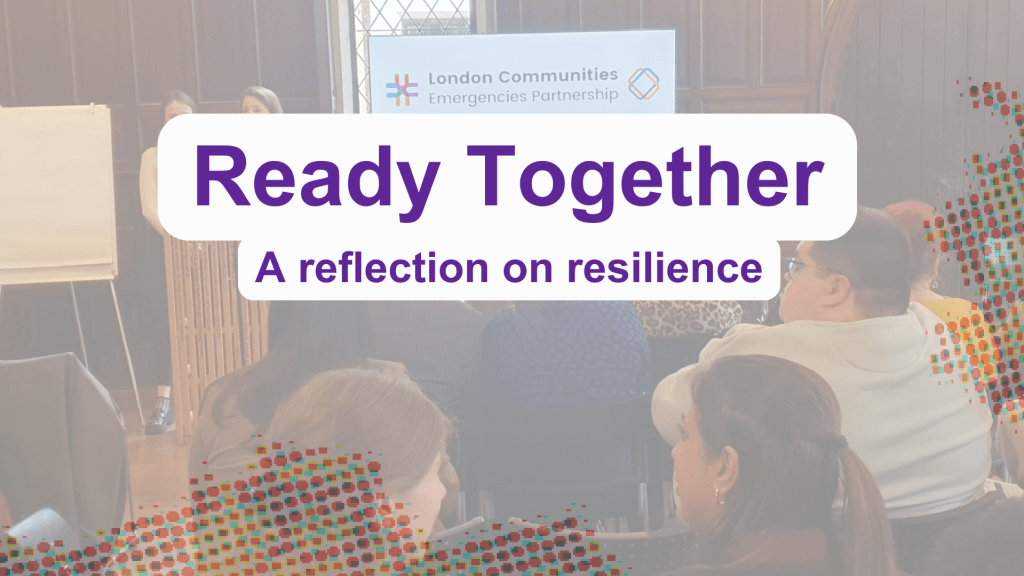
I attended the London Communities Emergencies Partnership “Ready Together” Conference, an insightful reminder that effective emergency response is built before crises occur.
Trusted partnerships, community belonging, and cross-sector collaboration are essential. A key takeaway was the importance of involving those with lived experience in decision-making and empowering leaders at every level to act. Youth engagement emerged as critical: bridging the gap between awareness and action requires accessible communication, practical guidance, and investment. Social cohesion depends on breaking silos, sharing responsibility, and building capacity collectively. In an increasingly uncertain environment, preparedness, collaboration, and inclusive leadership are no longer optional, they are foundational.
The conference highlighted that social cohesion is central to effective emergency response. Strong, pre-existing partnerships and community belonging enable faster, more coordinated action.
A key priority is involving people with lived experience and empowering individuals at all levels to act. Youth engagement remains a critical gap—while awareness exists, practical response capability is limited due to socioeconomic barriers and lack of accessible information. Bridging this requires investment, clear communication through relevant platforms, and meaningful inclusion in governance. Breaking organisational silos, sharing responsibility, and building local capacity are essential to creating resilient, connected communities prepared to respond collectively to increasing uncertainties.
Here are some key insights from the day:
- Effective emergency response depends on trusted relationships built before crises (CEO, 25+ years in charity sector).
- People respond better when they feel connected to where they live.
- Empower girls and underrepresented groups to lead.
- Leadership is collective, not individual (Police perspective).
- Involve people with lived experience in decision-making.
- Be ready to engage; acknowledge uncertainty.
- Short planning moments (even 5 minutes) can be critical.
- Step forward—do not wait for invitation.
- Empower individuals with authority to act beyond formal roles.
- Identify who holds key information during emergencies.
- Capacity is the foundation of delivery.
- Global events increasingly impact local communities.
- Post-emergency care requires coordinated networks.
- Fragmentation across organisations (silos).
- Uneven funding and shared responsibility.
- Lack of support for vulnerable groups (e.g., prisoners).
- Increasing instability in London.
- Disconnect between organisations and younger generations.
- Break silos: Cross-sector collaboration is essential.
- Networking is critical: Know people, resources, and referral pathways.
- Lobbying matters: Engage government and policymakers to shape resources.
- Shared accountability across charities, public sector, and communities.
- Recognise and sustain emergent leaders during crises.
Key challenges
- Gap between awareness and real-life response capability.
- Socioeconomic barriers: housing, low wages, limited public services.
- Limited understanding of resilience and government emergency
Engagement priorities
- Involve youth in governance and decision-making.
- Provide practical, accessible guidance (not abstract concepts).
- Invest in research, funding, and structured pathways (e.g., apprenticeships).
- Create safe spaces for learning and participation.
Communication strategy
- Use multi-platform communication, especially social media.
- Adapt language—“resilience” feels distant to many young people.
- Make information clear, relevant, engaging
- Learn from effective models (e.g., Metropolitan Police social media, influencers).
- Build relationships before crises.
- Strengthen local capacity and coordination.
- Engage youth meaningfully—not symbolically.
- Shift organisational mindset toward collaboration and adaptability.
- Prioritise clear communication and shared responsibility.
A big thank you to Joelma for these reflections on the Ready Together event, and thank you to the London Communities Emergencies Partnership for an excellent event!
 London Boroughs Faiths Network