European links

EuropeTwo upcoming meetings in Brussels, Belgium, organised by our European friends at Religions for Peace and European Network on Religion & Belief.

RfP logoThursday 19 March at the European Parliament.  Welcoming each other in Europe: a call for non-discrimination, with Religions For Peace Europe & the Global Network of Religions for Children.  This meeting falls within a larger RfP gathering this week, with over 60 participants from 14 European countries.  Download the programme here, which includes booking details.

The President of Religions for Peace Europe is Yolande Iliano, whom some of us will remember as one of our guest speakers at ENORB UK.  The Secretary General of the European Council of Religious Leaders, Jehangir Sarosh, spoke at our London Peace Conference last September.

enorb logoilgaThursday 26 March  Equality for all!  EU equality legislation against hate speech & discrimination on grounds of religion, belief, sexual orientation, gender identity and gender expression.

This is a joint event by ILGA-Europe and ENORB in Brussels looking at existing and proposed equality legislation in Europe and exploring areas of potential tension in a spirit of dialogue and mutual understanding.

Download the invitation and full programme here.  Book by emailing Anusha Dakan.  LBFN was one of the networks which brought the European Network on Religion & Belief together a few years ago and convenes ENORB UK.  Alan Murray, President of ENORB, said a few words about this event at our last meeting at Church House, Westminster.

Sheffield gathering for local practitioners

IFN headerNot in London, but a chance to get together with local practitioners from across the country: a day conference on Thursday 26 March at St Mary’s Conference Centre, Bramall Lane, Sheffield S2 4QZ, organised by the Inter Faith Network for the UK.

Bessie White (Hounslow Friends of Faith), a long standing member of LBFN and our peace-building social lab, is one of the speakers.  Download the full programme here.  There are three workshops:

  • getting the message across (communications)
  • funding and resourcing local work
  • developing and maintaining programmes that work well for your area

The event is free and is open to all local inter faith groups.  Book a place by emailing IFN’s Hannah Cassidy with a booking form.  Download the booking form here.

Peace Cafe 17 March 6pm

Aff_CafesDepending on the origin of our food, clothes, cosmetics or household goods, our seemingly innocent actions can contribute to human and environmental disasters somewhere on the globe.  The Rana Plaza disaster in Bangladesh highlighted the direct links between our consumer choices here in the UK and lives overseas.

Ethical choices and consumerism is the topic of our next Peace Café, on Tuesday 17 March at 6pm at LBFN’s home at Collaboration House, 77 Charlotte Street, W1T 4PW (Goodge Street tube).

Our special guest is Shehroze Khan from MADE in Europe, a grassroots faith-based charity raising awareness about environmental protection, justice and poverty, and our conversation will include diverse views and a wide range of experiences.

Let LBFN know if you plan to join us.  Bring a little food to share.  Everyone can brew the change.  We look forward to seeing you there!

#VisitMyMosque on Sunday 1 February

vmm2-300x300This Sunday is a great opportunity to visit our local mosques and enjoy a cup of tea.  Islamic centres will be opening their doors to visitors as part of a Muslim Council of Britain initiative to reach out to fellow Britons following tensions around terrorism.

Mosques will be sharing tea and refreshments, alongside an insight into the day-to-day goings on of a busy Muslim centre of worship.

Members of the community are there to get to know one another better and some may be on hand to answer questions about Muslims and Islam where this is possible.  Local mosques will also be inviting inter-faith leaders as well, and all will be invited to come together to demonstrate unity and solidarity during what has been a tense time for faith communities.

Many mosques welcome visitors as a matter of course, but a list of participating centres can be found here and is being regularly updated.  Those in London include Islamic centres from a range of Islamic traditions:

Balham Mosque, 47A Balham High Rd, Tooting SW12 9AW  www.balhammosque.org
Finsbury Park Mosque, 7-11 St. Thomas Rd, N4 2QH  www.finsburyparkmosque.org
Hyderi Islamic Centre, 26 Estreham Road, Streatham, SW16 5PQ  www.hyderi.org.uk
Shi’a Ithna’ashari Community of Middlesex, 39 Gloucester Road, Harrow, HA1 4PR  www.sicm.org.uk
Sri Lankan Muslim Cultural Centre, 2 Whitefriars Avenue, Harrow, HA3 5RN  www.slmcc.co.uk
Tooting Islamic Centre, 145 Upper Tooting Rd, SW17 7TJ www.tootingislamiccentre.org

Add a comment below if you know of others which are open on Sunday.

Post Paris thoughts

We couldn’t meet together so soon after the Paris attacks without reflecting on their impact on local communities in London.  I asked Steve Miller and Malik Gul, trustees of LBFN, to offer their thoughts at the start of our meeting last week.  These are reproduced below.
SONY DSC

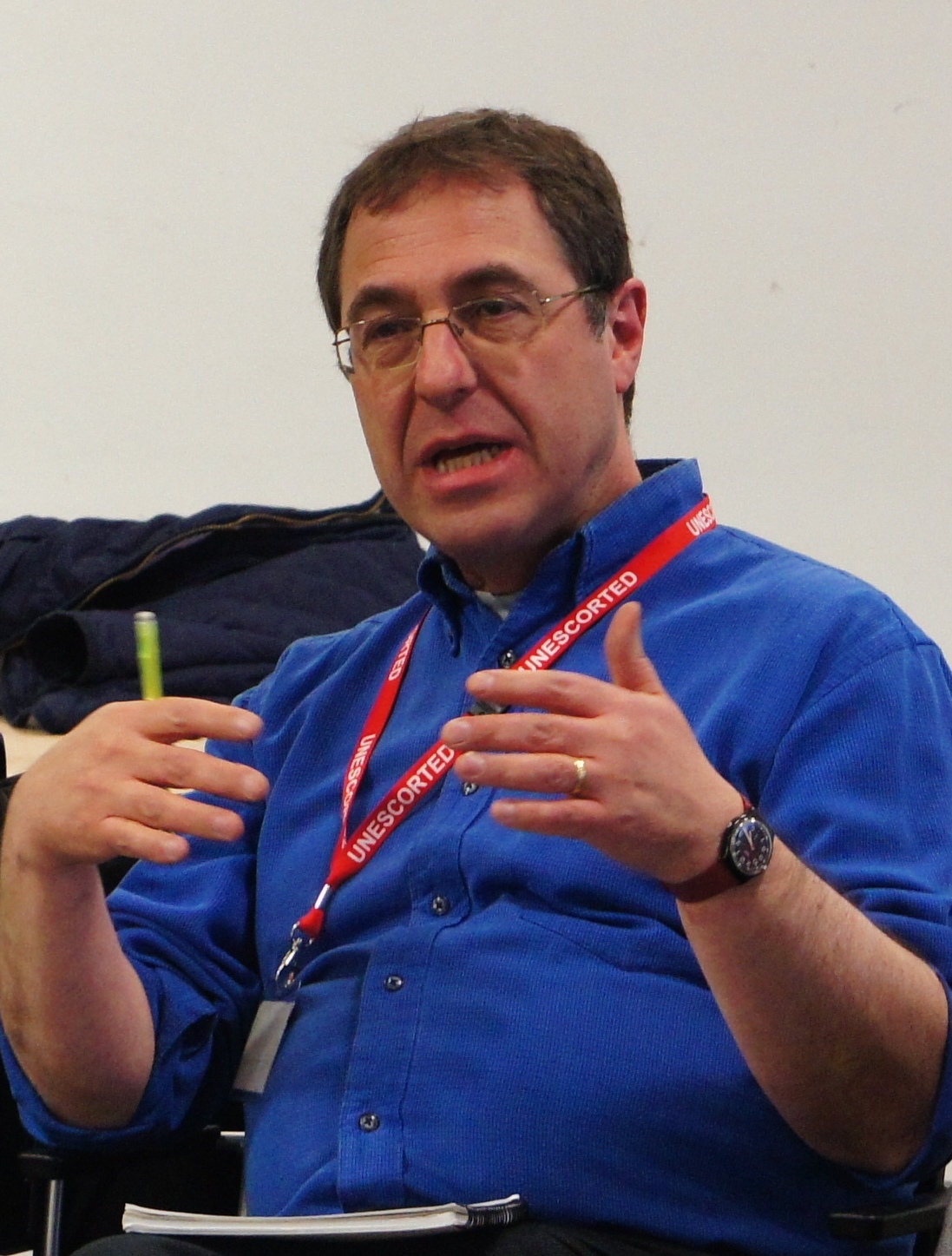
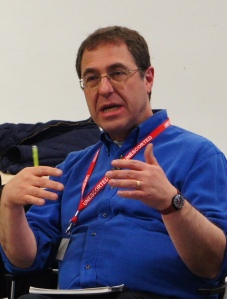
Steve Miller

Like everyone I’ve scanned a lot of comments, blogs and some much longer pieces in the press and online. I’m not sure that I have anything near a definitive response or reached conclusions that are much more than ‘on the one hand’ and ‘on the other hand’. 

What is clear is that these events have been painful and distressing to large numbers of people, and at the same time appear – as often happens with traumatic events – to have opened doors for positive engagement, activism and conversations that might not have happened otherwise.

Some of these conversations have been around ideas of freedom and the nature of a free society. Obviously there are associated ideas. Some people have linked ideas of freedom to ideas of obligations and responsibilities. Some have explored the nature of freedom itself. In the Jewish cycle of readings from the Torah (first 5 books of the Bible) we are just beginning to read the story of the Exodus fro Egypt and a number of recent sermons have explored the distinction between freedom from oppression, and freedom to create a fair society.

When exploring ideas of freedom – especially if you are linking it to liberation and freedom from oppression – then notions of power inevitably come into the conversation. Who is powerful and who is not. In some contexts this equation is very clear but in many others the balance and perceptions of power are more ambiguous or confusing or constantly changing. In this context perceptions of Muslims and perceptions by Muslims are certainly mixed. Who is powerful, how do they use that power, and over who?

There has also been something in the air about victimhood. I think we are all repelled by the idea that there is some kind of mental ladder of victimhood with some victims being ‘more’ than others. But I have been struck at how quickly sections of the public and media responded to the notion of a rise of antisemitism. This is a more easily understood notion than understanding the meaning of the victims in the Charlie Hebdo building, let alone the Muslim victims of hatred around the world. With so many acres of space on the mass media front pages covering the rise of antisemitism, people may not be aware that this is being hotly contested within the Jewish community. The majority view seems to be that not only in the UK but also in France, experiences and perceptions of antisemitism are not quite as dramatic as some would suggest.

And there has been an aspect of these conversations that have, predictably, been subject to political and populist opportunism. At one level the obvious soundbites are important. It is important that Prime Ministers and Presidents stand up against violence and terror, prejudice and discrimination. But we also expect more from our political leaders. We expect a level of understanding that goes beyond simplistic polarisations. We are right to expect governments to think and act in ways that reflect the complex nature of the society we live in. Cohesion, participation, integration, inclusion and empowerment are interesting and useful policy slogans but they also act as proxy shorthand for a range of patterns of behaviour which need to be unpacked and understood. Understanding the detail is essential; looking at the big picture is useful, but getting to grips with people’s lived experience is what makes the difference.

And for ourselves around the table, where does this leave us? We can also be guilty of generalisations, platitudes and truisms. We need to take our eternal values and principles and look to how we can apply them at a local, regional and national level. By sitting around the table we are already taking the first step. We need work together in solidarity – not to compare my suffering to your suffering – but to see an attack on anyone as an attack on us all. A society based on solidarity is a society in which all of our diverse identities can exist together, flourishing and without fear.    Steve Miller, Faith-based Regeneration Network
malik at peace conference

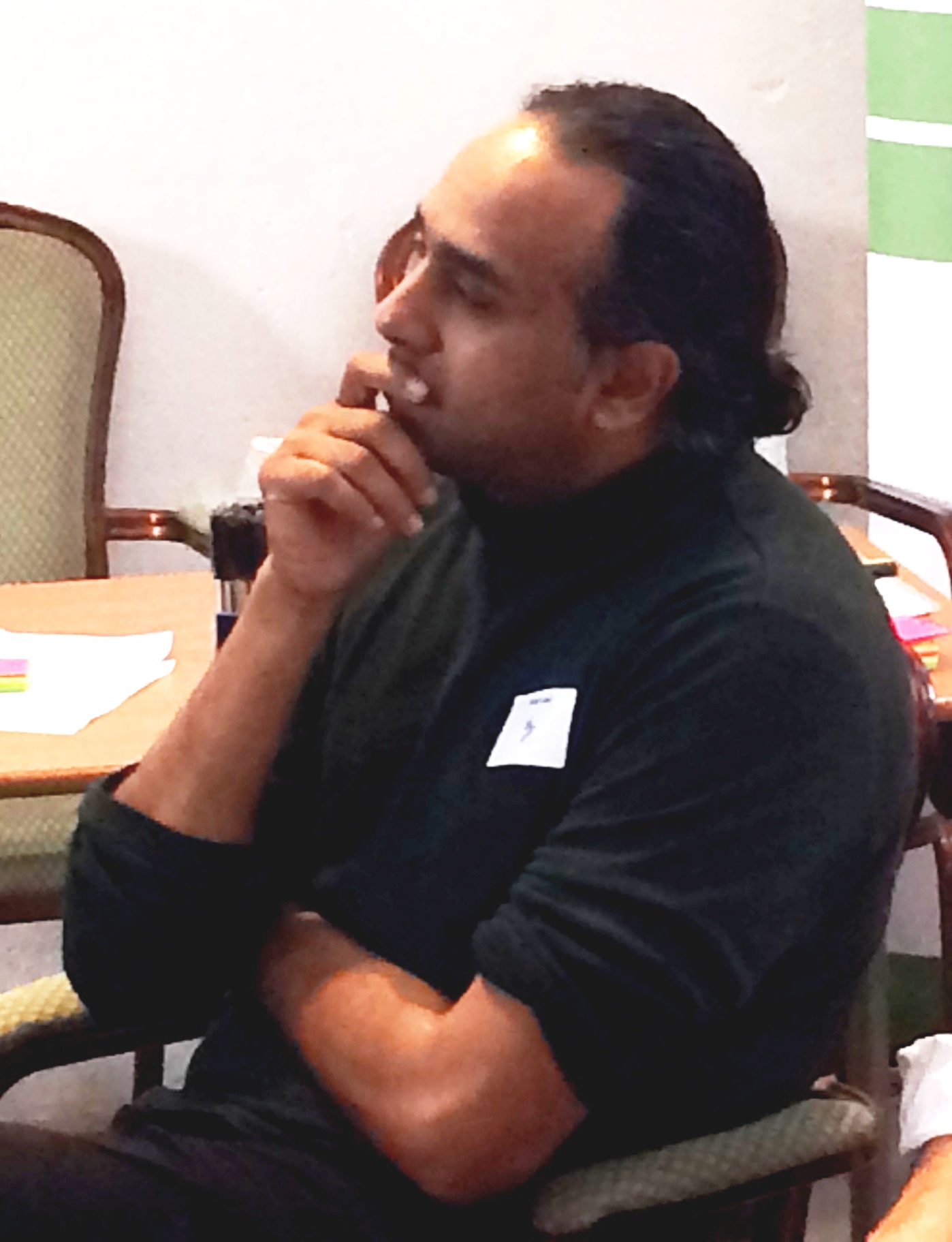
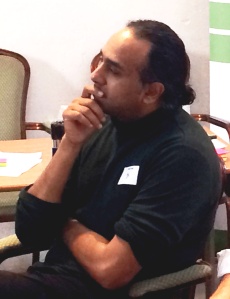
Malik Gul

Catriona asked me to share some thoughts from a personal perspective, and I am happy to do so, as I feel that in all the noise and commentary following the events in Paris, the voices, hopes and fears of everyday and ordinary Muslim members of our community have been ignored and marginalised.

I am a Muslim. I was born in Birmingham. I was there a few days ago with my Mum and members of my family, and Birmingham has, as many of you will know, a large and settled multicultural community with a significant Muslim population. A recent Fox News commentator even went so far as to say that Birmingham has now become a No Go Area for Non Muslims, which is an example of some of the hysteria that is now circulating and the fear that this has produced.

My Mum, as with many of our Muslim communities came to the UK over 50 years ago, and others from much longer before then. The 1950s and 1960s saw the greatest influx of people from the former British colonies of Pakistan and India, with very many of them of the Muslim faith. Growing up, I can recall us sharing neighbours and friendships with people of all faith and none… Christians, Jews, Hindus and Sikhs, many of whom were also immigrants and newcomers, so there was a common bond between us. Of exchanging gifts at each others festivals, putting up trees and streamers and bulbs at Christmas, being welcoming towards each other, colours, and laughter and fellowship. Of course there was also an ugly side. Racism, ‘Paki bashing’, discrimination of all sorts, but nevertheless there was solidarity, across all faiths, across trade unions, across neighbourhoods, a determination to continue to work hard, to contribute, to be a part of our shared community.

Then only very recently, things started to become very dark and confusing, with events outside the control and influence of these communities casting a large shadow over them. The rise of a theocracy in Iran with a narrative that named ‘The West’ as perpetrators of past injustices, particularly around its imperial past and present, the accommodation between the Afghanistan government and the former Soviet Union, which the USA didn’t take too kindly to, and started to build and arm networks of fighters in Pakistan to fight a proxy war on its behalf, the fallout from this which led in part to the attack on the twin towers in New York. We were all spectators to this. No one in our communities had heard of the Mujahedeen, Al Qaida, Taliban, and then within a relative short space of time, we were becoming labelled as being in league with them and asked to become apologists for their behaviours.

This turn of events has left many of us in the Muslim community, confused, isolated, dazed and fearful. Old certainties of trust and neighbourliness are becoming fractured. As the US and the UK started to gear itself up for war in Iraq and Afghanistan, with again all of us on the outside of this, only being allowed to spectate, with many hundreds and thousands of us walking side by side against these actions, and all of us being ignored by our political leaders. Then as the fall out of these conflicts started to spill out all over the world, again, our communities have become labelled and picked out as somehow having a responsibility for these crimes.

Younger members of the community, much more able to access knowledge and information, much more aware of globally connected events, bear witness to the hypocrisies of the political classes. And it angers and upsets them. Just a few days ago in Paris, the Charlie Hebdo march had a representative of the Saudi Royal Family standing arm in arm with these who seek to defend free speech, yet the Saudi regime crushes free speech at every opportunity. When they point out these hypocrisies, they are told that they are being radicalised; and their parents encouraged to close down debate and inform on them. Muslims, far from being the perpetrators of violence and hate, have been the biggest victims of it, and have been and are on the forefront of the war on terror. A few weeks ago, 165 school children were murdered in their classroom in Peshawar, a few days ago over 2000 people were slaughtered by terrorists in Nigeria. Pakistan is also caring for the greatest displaced population in the world running into several millions. To be the biggest victims of terrorism and then, at the same time, being signalled out as sympathisers and apologists for it, is a growing and felt injustice.

What has kept the community resilient is our faith. The Prophet has said, that “he who serves his neighbour is the best of men”. There is a famous Hadith (sayings of The Prophet) that tells the story of a local woman who didn’t much like the Prophet, and would always curse and swear at him. It was a daily occurrence and she lived above the route that he would pass every day. On one day, as the Prophet approached the woman’s house, expecting his daily haranguing, he noticed that the woman was not there. When he got back to his home, he asked his companions to check on her. When notified that she had fallen ill, he sent physicians to her house, and himself visited to make sure that she was OK. This example of the Prophet has been uppermost in the minds of my community. That in spite of the attacks against us, the best example we can set is our love for all. This faith, along with the outpouring of support and solidarity from people right across the board, demonstrates that we are not alone, and that through unity and solidarity we can all endure and survive the terrible events that now engulf us all.   Malik Gul, Wandsworth Community Empowerment Network.
Unity after Paris attacks

asdfad

Muslim, Jewish and multifaith leaders after the unity event at Regent’s Park.

LBFN helped to organise an event at London Central Mosque last Friday to demonstrate unity in the wake of the Paris attacks.

Dr Shuja Shafi, Secretary General of the Muslim Council of Britain took the initiative, inviting senior figures including Vivian Wineman (President, Board of Deputies of British Jews),  Rabbi Laura Janner-Klausner (Senior Rabbi, Movement for Reform Judaism), Commander Mak Chishty (MPS), Jehangir Sarosh (Religions for Peace), Dr Harriet Crabtree (Inter Faith Network for the UK) and Mehri Niknam (Joseph Interfaith Foundation).

Cate Tuitt

Cate Tuitt

Several LBFN members attended, including Bessie White (Hounslow Friends of Faith), John Woodhouse (Westminster Cathedral Interfaith Group) & Cate Tuitt, Justice & Peace Commissioner for the RC Archdiocese of Westminster, who shares her reflections here.

“Expressions of unity and hope were delivered in a meeting called by Dr Shafi & attended by Vivian Wineman, President of the Board of Deputies.

Commitments and dedications were expressed by all faith leaders and community advocates. A calling to be more motivated and engaged following the tragedy in Paris were made by the assembled dignitaries.

Shalom Salaam was the offered greeting to reflect the Jewish and Muslim days of worship, united in their grief for the loss of life of Jewish, Muslim and secular brothers and sisters.

Catriona of LBFN recalled visiting the Jewish Museum in Brussels after the shootings last summer, saying how important it is for Jews to be able to be Jews, for Muslims to be Muslims and for everyone to be who they are. She reflected on the passage from the Qur’an chosen by Sheikh Khalifa (49:13) on living well together while remaining different. She welcomed strong leadership as well as essential grassroots work.

Sorrow was balanced with the courage and dignity to continue to work tirelessly in support of one another, our faith communities and beyond to overcome those who try to divide our unity and peace.

Dr Shafi said this was a time for unity and engagement. He expressed sadness at the recent backlashes against Muslims.

Vivian Wineman reminded us of the wonderful religions of peace and love, the common bonds they hold and of the need to protect both Islam and Judaism as minorities in Europe.

The overall consensus was that we must not fall prey to what terrorism wants by reacting in a hostile manner to those of different traditions.

We must reinvigorate our efforts, build confidence and raise trust in renewed covenants for peace.”

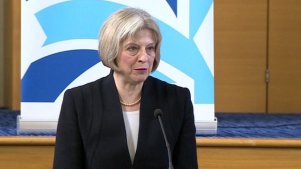
theresamayThe Home Secretary spoke today on government measures to end anti-Semitism.

The Metropolitan Police will be holding a joint meeting with LBFN’s crime and security social lab soon.  Mosques, synagogues and others wanting to work together to improve safety are welcome – please get in touch if you are interested.

The Peace Café (continuing discussions from the London Peace Conference) meets six-weekly – contact LBFN for details.

The next LBFN meeting on Tuesday 20 January will include local reflections on the Paris attacks.

Invitation to LBFN Tuesday 20 January 3-5pm

We have a great line-up next week!  Thanks to everyone on the email list who has responded.  We’re looking forward to some excellent input and to hearing from local communities across London.

Tuesday 20 January 3-5pminfo_capital_home_v2

Church Urban Fund, Church House, 27 Great Smith Street, SW1P 3AZ

Our programme includes

  • Near Neighbours Programme with Co-ordinators Becky Brookman & Revd Tim Clapton – bring your own thoughts on what is most needed locally.
  • Poverty & food banks with Rashid Laher (Kingston Inter Faith Forum) & Canon Steven Saxby (London Church Leaders) – what’s happening where you are?
  • General Election May 2015  How to run local hustings, with Revd Dr Alan Gadd (Faiths Together in Lambeth) – what are you planning in the lead-up to the election?
  • Reflection on the Paris attacks last week.  There have been some poignant messages of support and strong affirmations of solidarity – bring your local responses to share.

We are grateful to the Church Urban Fund for providing meeting space.  CUF helps some of England’s poorest and most marginalised people (regardless of religious tradition) transform their lives for the better.  CUF’s offices are based in the Church of England’s administrative HQ.

Let me know by Friday 16 January if you plan to join us (&/or if you’d like to be added to the email list).

Charlie Hebdo attack in Paris

Trafalgar Square last night.  Photo @LPJLondres

Trafalgar Square last night. Photo @LPJLondres

Several people have been in touch after yesterday’s shocking attack on journalists and police in Paris.

For safety advice, please see Staying safe in troubled times.

Statements of condemnation include those by the European Council of Religious Leaders, the Muslim Council of Britain, the Archbishop of Canterbury and the Board of Deputies of British Jews.  The Houses of Parliament and the Metropolitan Police both held a minute’s silence this morning.

There were many vigils last night, including a large gathering in Trafalgar Square and the placing of flowers and condolences at the French Embassy by a group of young Muslims.

LBFN supports the excellent local relationships which exist between Londoners from different religious and philosophical traditions.  The Peace Café meets on Monday 12 January, with opportunities for concerns for all our communities to be shared.

Responses from local groups are very welcome.

Keeping the memory alive: Holocaust Memorial Day

ktma_-_yellow

An important date which brings us all together each year is Holocaust Memorial Day on 27 January.  Boroughs across London are planning events.

“HMD is a time when we seek to learn the lessons of the past and to recognise that genocide does not just take place on its own, it’s a steady process which can begin if discrimination, racism and hatred are not checked and prevented.”

This year is the 70th anniversary of the liberation of the Auschwitz-Birkenau WWII death camp and also the 20th anniversary of the Srebrenica genocide in Bosnia.

There are plenty of imaginative resources to mark the theme for 2015 “Keep the memory alive” on the HMD website.

The HMD team is always very helpful to anyone planning a local event.  Get in touch with them for advice and visit their activity page here.

Inter Faith Week 2014 in London

Inter Faith Week starts soon!  Find out what’s going on in your borough by zooming into the capital on the IFW map.  Check the list below to download flyers and invitations.

London is very busy with a huge range of exciting activities planned, including:

6 November    Youghusband Lecture, Westminster

8 November    Peace in Tulse Hill, Lambeth

11 November   Talk on Shabbat Croydon Faith Education Resources

12 November   Humanism in Europe: working together across religion & belief traditions, Westminster (book your place)

15 November   Concert in aid of Kingston Foodbank  Kingston Inter-Faith Forum

16 November  The Contributions of Faith Communities to the First World War Zoroastrian Trust Funds of Europe

16 November   30th Anniversary Celebration Harrow Inter Faith Council

17 November (closing date)  Westminster Faith Exchange Art Competition

17 November   Inter Faith Week Launch in Sutton  Sutton Faith & Belief

17 November   Encompass – work in action, with Barry Mizen MBE, Encompass – The Daniel Braden Reconciliation Trust

18 November   Faith and Wellbeing Faiths Together in Lambeth

18 November   Religious Tensions in the Holy Land and their wider impact  Islington Faiths Forum

18 November   Sacred Treasures Camden Council and the British Museum

18 November   Faith involvement in peace making today  Hounslow Friends of Faith

19 November   Faith: Too Significant to Ignore FaithAction National Conference, Westminster,  £70

19 November   Praying for Peace Balham & Tooting Community Association

20 November   Is Interfaith Dialogue Worthwhile?  Barnet Multi Faith Forum with Alyth Gardens Synagogue

22 November  Southwark iWitness – Trail & Mayor’s Reception Southwark Council

22 November   Celebrating culture through dress and food – women’s event  Hounslow Friends of Faith

22 November  Town Centre Event  Barking & Dagenham Faith Forum

22 November   Inter Faith Quiz  Enfield Faith Forum

25 November   How can Humanists and Muslims live and work together in 21st Century London? London Humanists, Conway Hall, Camden

If you are planning activities and would like them listed here, please leave a comment and/or let LBFN know!